What Every Parent Should Know
About Toddler Fever
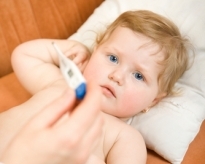
A Toddler fever can be a sign of many different ailments in your child. A fever can be caused because of teething or maybe just from a cold or flu. It also can be a red flag that your child is fighting an infection somewhere in that little body of theirs. Whatever the case or the cause a fever no is unpleasant and we want to find some comfort for our children.
My toddler is scary when he gets a toddler fever. Don’t be alarmed parents, what I mean by scary is that he is definitely not his “normal self”. He gets all sleepy looking and doesn’t want to play. I know when he has a fever not only by touching his head but by his actions. You know your child well enough to be able to determine when they are not feeling well.
How can you tell when your toddler has a fever?
Toddler fever will usually show signs of your child being sick. Here are a few symptoms they may have:
- Excess sweating and/or flushed skin or face
- Dry, hot skin that feels warm to the touch
- Sleepiness
- Unusual breathing or cold symptoms
- Ear pain
- Vomiting
- Poor appetite
A fever is usually a sign that the body is waging a war against infection. Taking your child's temperature can confirm your suspicions and help you and your child's doctor figure out the best way to get your toddler back on the road to health. Most doctors — and the American Academy of Pediatrics (AAP) — agree that a normal body temperature for a healthy child is between 97 and 100.4 degrees Fahrenheit (36 to 38 degrees Celsius). If your toddler's temperature is above this range, he has a fever.
A temperature reading isn't the only indication of whether a fever is serious. Your toddler's behavior is a factor as well. So remember watch your child. We are ultimately the best judge to know when there is toddler fever. If it doesn't stop him from playing and eating normally, there may not be cause for alarm.
Special Note:
Everyone's temperature rises in the late afternoon and evening. That explains why your toddler’s fever spikes at night. The natural cycle of our internal thermostat explains why doctors get most of their phone calls about fever in the early evening and the middle of the night. Remember to always call the pediatrician if you have any concerns about toddler fever. It will NEVER hurt to just call.
WATCH for any of the following symptoms, which could indicate a more serious problem when coupled with a fever:
- If your toddler has small, purple-red spots on his skin that don't turn white or paler when you press on them, or he has large purple blotches. Both of these can be a sign of a very serious bacterial infection.
- If your toddler is having difficulty breathing (working harder to breathe or breathing faster than usual) even after you clear his nose with a bulb syringe. This could indicate pneumonia or toddler asthma.
Which fever-reducing medicines are safe for my toddler?
You can use a childrens acetaminophen or ibuprofen to bring down your toddler's temperature.
Be very careful when administering these medicines to your toddler. You should always discuss with your pediatrician about the proper dosing amount. His weight will determine the right dose. Always use the measuring device that comes with the medicine or an oral syringe. Don't give any medicine more often than is recommended. The directions will probably say that you can give acetaminophen every four hours and ibuprofen every six hours.
NEVER give aspirin to your toddler. Aspirin can make a child more susceptible to Reye's syndrome, a rare but potentially fatal disorder. A SPECIAL NOTE: I have stated this before on other pages. Most doctors don't recommend over-the-counter cough and cold preparations for babies and young children. They have recently found these medications to not work and be dangerous for young children. But if your child is taking a prescription remedy, talk with the doctor before giving your child any other medicine, like ibuprofen or acetaminophen. Cough and cold remedies may already contain these products and you do not want to over medicate.
If you are interested is helping others with the treatment of their toddler's illnesses, a career as a medical assistant could be right for you. Check out eMedicalAssistants for all of the information necessary to get started today.
Alternative methods to lowering toddler fever:
Again, always discuss these with your pediatrician FIRST.
- You can try to lower a toddlers fever by sponging him down with lukewarm (not cold) water or giving him a lukewarm bath.
- You can always try and take off their clothing to their underwear and allowing them to run around the house like this. It will lower their body temperature. Clothes tend to "feed" a fever.
- Never try to reduce a fever by sponging down your toddler with rubbing alcohol. Rubbing alcohol can be absorbed into your child's bloodstream through the skin. It can also cool him too quickly, which can actually raise his temperature.
Fever-reducing medicines bring down body temperature temporarily. They don't affect the bug that's producing the infection, so your child may run a fever until his body is clear of the infection. This can take at least two or three days. It may be a rough few days but……….. it will get better LOL.
Different methods you can use to take your Toddler's temperature:
Rectal Reading
- A rectal reading is recommended for babies 3 years of age and younger -- it provides the most accurate readings for that age group. Rectal readings are also recommended for older children who aren't able to have their temperature taken orally because of continual coughing or a stuffy nose.
Oral Reading
- Once your child is 4 or 5 years of age, this is usually the most preferable method of taking his temperature. It offers a more accurate temperature than ear or armpit readings. Now my toddler is 3 and we practice this method and he is fine with it. It really depends on your child.
(Armpit) Reading
- This method is acceptable for babies over 3 months of age. These results are usually not as accurate. This method is for parents who are uncomfortable with taking your infant's or young child's temperature rectally. The armpit method is the next best choice. I used this method for my son when he was a baby.
(Ear) Reading
- This fairly new method of taking a toddler’s temperature (which can be used on babies 3 months and older) also seems to be the one that parents prefer most. It provides quick results -- in just a few seconds -- and generally keeps kids feeling relaxed and comfortable. However, there are a few drawbacks: tympanic thermometers are more expensive than oral or rectal thermometers and don't provide readings that are quite as accurate. I think they are great for toddler fever. You want to get their temp the easiest method possibly.
Remember to always call your pediatrician and discuss your toddler’s temperature and symptoms when there is a fever present. We are the best judge but it never hurts to get a second opinion if we are unsure. I never hesitate to call the doctor or nurse when it comes to my toddler. He is so precious to me and I want him to stay healthy.
* I am not a Doctor or Licensed Professional in the area of toddler fever. I am a stay at home Mom passing on tips, advice and information that are based on my opinions. Always remember to consult your pediatrician with serious questions concerning your child and their ailments.*
Have Any Toddler Fever
Concerns or Comments?
Please Share your concerns or tips with us about this issue. You may have some advice that will help other moms concerning this subject matter. We want to hear about it!
Special note: After you submit your comments, be sure to put a check mark in the boxes on the thank you page at the bottom, and enter your email address. This will ensure that you receive a response after I Answer your question Thanks...
Read Other Great Tips
From Parents Just Like You
Click below to see contributions from other visitors to this page...
My child spikes fever only at night Not rated yet
My son who will be four in Semptember was born with a very low core body temperature...34.5 Celsius. It took over six hours of the heating bed to bring …
Fever And Vomiting Not rated yet
My 4year old son had viral cold with no fever but on the 4th day he developed fever voimatings and loose motions dr adviced for syp oflomac 100mg 5ml …
Click here to write your own.
Leave Toddler Fever and return to Child Health
Leave Toddler Fever for Toddlers Home
